Consumers/Residents
You Can Prevent Nonpoint Source Pollution
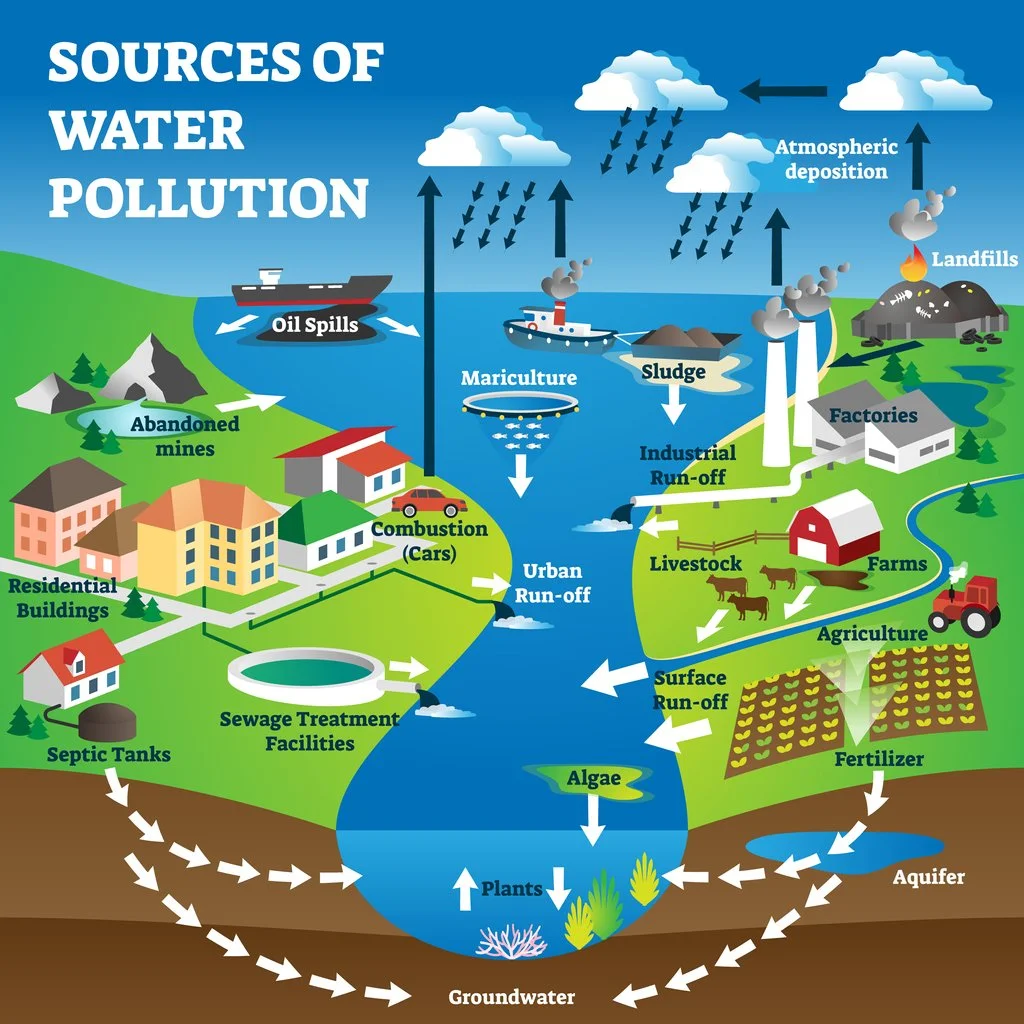
When rain or stormwater flows across rooftops, lawns, streets, parking lots, construction sites and open lots it collects all kinds of pollution from “nonpoint sources” and washes them into our rivers and streams. Typical pollutants from stormwater pollution include sediment (dirt), oil and grease, fecal coliform, pesticides and fertilizer, lawn clippings, debris, and heavy metals.
Contrary to what you might think, stormwater runoff does NOT flow into the sewer and to the wastewater treatment plant for treatment (clean up). Polluted stormwater flows directly into our freshwater rivers, streams, and lakes. It also can impact groundwater sources.
Four quarts of oil can cause an eight-acre oil slick if spilled or dumped down a storm drain. Just one quart of motor oil can contaminate 250,000 gallons of drinking water.
Pet waste is a major source of bacteria that ends up in our streams. It contains as many as 75 diseases and viruses that may make our water unsafe for fishing, swimming, and other types of recreation.
Leaves and grass clippings that get blown into storm drains deplete the oxygen levels in our rivers, streams, and lakes, harming aquatic life.
Litter not only looks bad along our streams and rivers but also can be ingested by fish and waterfowl.
Water runoff from washing cars on pavement carries detergent and chemicals directly into our storm drains and our water sources, harming our water quality, wildlife, and recreation areas.
Polluted stormwater runoff has been identified by the US Environmental Protection Agency as the nation’s main cause of water quality problems.
Nutrients from fertilizers – usually phosphates – enter rivers and streams and stimulate the growth of algae. Excessive algae growth harms oxygen levels in lakes and ponds, endangering fish and other aquatic life.
Tips for Pollution Prevention
-
DO pump out your septic tank every two or three years and keep accurate records of your system’s maintenance.
DO NOT use commercial septic tank cleaners.
DO NOT pour hazardous materials such as paint, paint thinner, solvents, industrial cleaners, disinfectants, pesticides, or waste oil down toilets or sinks.
DO NOT pour grease or cooking oil down the drain. It will clog the soil and leaching system.
DO NOT overload your system with food waste from the garbage disposal.
DO NOT dispose of nonbiodegradable objects such as disposable diapers down the toilet. They do not decompose.
DO NOT use chlorine bleach.
DO be alert to signs of a failing system such as the presence of wet areas above the leaching field and backing up of wastewater following periods of heavy water use.
-
Never dump anything that you wouldn’t want to drink or swim in on the ground, onto the street, down a storm drain or into a drainage ditch.
Recycle motor oil and other vehicle fluids.
Throw litter in its place.
Clean up after your pet – even in your own yard.
Check your vehicles for leaks and repair them.
Minimize the amount of hazardous wastes (such as excess paint, bleach, and fertilizer) generated at home.
Compost yard clippings and leaves. Don’t blow them into the street.
Use fertilizer and pesticides appropriately and only when needed.
Wash your vehicle on your lawn rather than on pavement.
Tell a friend or neighbor about how to prevent stormwater pollution and get involved in your community’s program.
-
Dispose of hazardous chemicals properly. Never dispose of hazardous chemicals into your septic system, ditches, or onto the ground.
Periodically inspect exposed parts of the well for cracked, corroded, or damaged well casings; a broken or missing well cap; and settling and cracking of surface seals.
Keep your well away from septic tanks, septic fields, animal pens, or other sources of potential contamination. Contact your local public health department for a copy of current regulations.
Slope the area around the well to keep surface runoff drained away from the well area. Do not install a well at the low end of your property or near potential contamination sources.
Inspect, maintain, and pump your septic system as recommended by your local health department.
Make sure a well cap is present or install a sanitary seal to prevent unauthorized use of, or entry into, the well.
Have the well tested once a year for coliform bacteria, nitrates, and other contaminants of concern to residents in your area.
Avoid mixing or using pesticides and fertilizers near the well.
DO NOT dispose of wastes in dry wells or in abandoned wells.
When abandoning an old well, do not cut off the well casing below the land surface.
-
DO NOT dispose of hazardous materials or wastes such as solvents, degreasers, waste oil, commercial cleaners, pesticides, paint thinner, or radiator fluid by pouring them down a floor drain, sink, or toilet.
DO NOT dispose of such materials or wastes by pouring them on or burying them in the ground or by pouring them down storm drains.
DO NOT use pesticides or herbicides near the well. Minimize the use of fertilizers near the well.
DO NOT park cars near the well or next to storms drains that empty to a dry well.
DO dispose of toxic and hazardous materials or waste properly. For household hazardous waste, contact your community for information on collection days.